Hurricanes expose windows, doors and façades to two serious threats at the same time: windborne debris and rapidly changing wind pressure. Ordinary glass may break under impact and leave an opening in the building envelope. Once that happens, wind and rain can enter the building, internal pressure can rise, and the risk of damage to the roof and surrounding structure increases.
Hurricane-resistant laminated glass is designed to reduce this risk. The glass may crack when struck, but the interlayer helps hold the broken pieces together and keep the glazed opening substantially closed. This post-breakage performance—not the promise of “unbreakable glass”—is the central principle behind hurricane impact glazing.
For glass processors, producing this type of laminated glass requires more than simply increasing glass thickness. Glass selection, interlayer performance, edge quality, de-airing, temperature uniformity and process repeatability all influence the finished laminate. The glass must then be incorporated into a properly engineered framing system and tested as a complete assembly.
Hurricane-resistant laminated glass normally consists of two or more glass plies permanently bonded with a high-performance polymer interlayer. PVB is widely used, while ionoplast interlayers may be selected when greater stiffness or post-breakage structural performance is required.
During a debris impact, one or both glass plies may break. The interlayer is intended to retain the fragments, resist penetration and continue spanning the opening while the window or façade is subjected to repeated positive and negative pressure cycles.
This makes hurricane impact glass different from ordinary safety glass. A standard laminated glass product may provide valuable injury protection, but it should not automatically be described as hurricane-resistant. Hurricane performance depends on the exact glass construction, interlayer, panel dimensions, edge support, frame, sealants, anchors and installation method.
Both heat-strengthened and fully tempered glass can be used in tested hurricane-resistant glazing systems. The correct choice depends on panel size, design pressure, thermal stress, safety requirements and the approved system configuration.
Heat-strengthened laminated glass is common in fixed architectural glazing. When heat-strengthened glass breaks, it normally forms larger fragments than fully tempered glass. These fragments tend to remain attached to the interlayer and can help the damaged laminate stay in the opening. Heat-strengthened glass also generally produces less roller-wave distortion and anisotropy than fully tempered glass when both are processed correctly.
Fully tempered laminated glass provides higher initial glass strength and may be required for doors, floor-level glazing, areas exposed to human impact or applications with particularly demanding wind loads. When fully tempered glass breaks, however, it fractures into many small particles and the laminate loses much of the stiffness previously supplied by the intact glass.
There is therefore no universal rule stating that every hurricane-resistant product must use either heat-strengthened or tempered glass. In many façade and window applications, a heat-strengthened laminated construction is a practical starting point. Where safety codes, structural calculations or an existing product approval require fully tempered glass, the tested tempered-laminated construction must be followed.
The following examples illustrate constructions that may be encountered in the market:
5 mm heat-strengthened glass + 2.28 mm impact-grade PVB + 5 mm heat-strengthened glass
6 mm heat-strengthened glass + 2.28 mm impact-grade PVB + 6 mm heat-strengthened glass
Heat-strengthened or tempered glass + approved ionoplast interlayer + heat-strengthened or tempered glass
Insulating glass unit comprising a monolithic outer lite, an airspace and a laminated impact-resistant lite
These examples are not universal specifications. Required glass and interlayer thicknesses can change with the size and aspect ratio of the panel, building height, design wind pressure, missile level, framing system and local building code.
A 2.28 mm or 0.090-inch PVB interlayer is frequently found in North American hurricane glazing approvals, but thickness alone does not establish compliance. The PVB formulation must be suitable for the intended impact application, and the complete system must pass the required tests. Substituting another glass thickness, interlayer product, sealant or frame detail can invalidate the tested configuration.
Before impact, the glass plies carry most of the load. After breakage, the interlayer becomes the main barrier preventing debris penetration and maintaining coverage of the opening. Its performance depends on several properties:
adhesion to the glass;
resistance to tearing and penetration;
stiffness at the expected service temperature;
elongation and energy absorption;
moisture resistance and long-term edge stability;
compatibility with coatings, frits, sealants and other system materials.
Using additional layers of ordinary PVB does not, by itself, prove hurricane resistance. Glass manufacturers should work with the interlayer supplier and system designer to select a validated product and define appropriate storage, handling and lamination conditions.
Hurricane certification normally applies to the complete window, door or curtain-wall assembly—not to a loose glass sheet alone. In the United States, commonly referenced procedures include ASTM E1886 and ASTM E1996. High-Velocity Hurricane Zone projects may also use Miami-Dade TAS 201, TAS 202 and TAS 203 requirements.
Depending on the required classification, the specimen may be subjected to:
Impact from specified large or small missiles at defined locations.
Positive and negative cyclic pressure loading after impact.
Structural wind-pressure, air-infiltration and water-resistance tests.
Verification of the frame, glass retention, anchors, fasteners and installation details.
Passing the impact event is only part of the challenge. The damaged glazing must remain sufficiently secured during thousands of subsequent pressure cycles. Glass bite, structural silicone, glazing tape, frame stiffness and anchorage are therefore just as important as the laminated glass itself.
Manufacturers should always confirm the applicable building code, design pressure, impact zone and approved test method for the destination market.
Producing clear glass is not enough. A high-performance laminate also needs strong, consistent adhesion and stable edges throughout its service life. Important process controls include the following.
The glass must be cut and edged without deep chips, shells or microcracks that could reduce its wind-load resistance. All drilling, notching and edge processing should be completed before heat treatment. The final dimensions and edge finish must match the tested system.
Oil, dust, polishing residue, fingerprints and poor-quality rinse water can interfere with adhesion. A suitable glass washing machine should provide stable brush pressure, clean final rinsing and complete drying, particularly at the glass edges.
PVB condition strongly affects processing and adhesion. Rolls should be stored and handled according to the interlayer supplier’s instructions. Open-roll exposure, workshop humidity, condensation and the time between lay-up and lamination should be controlled.
The glass and interlayer must be correctly aligned without wrinkles, trapped contamination or excessive edge disturbance. For thick or multilayer interlayers, the production method must provide a continuous route for air to escape.
Residual air is a major source of bubbles and local adhesion defects. A reliable PVB glass laminating machine should establish uniform evacuation across the complete panel and maintain vacuum during the critical heating stages.
The machine must heat the glass-interlayer assembly evenly , Uneven heating can create local optical defects, incomplete bonding or excessive edge flow. Recipes should consider total glass thickness, interlayer construction, glass size and actual loading.
A manufacturer planning to enter the hurricane impact glass market should evaluate a laminated glass production line by process capability, not only by maximum glass size or installed power.
Important equipment questions include:
Can the system process the required total glass and interlayer thickness?
How is air removed from the centre of large panels?
Are vacuum and temperature continuously monitored and recorded?
Can different recipes be stored for different glass structures and loads?
How does the system manage PVB moisture during processing?
Is product temperature uniform across the usable working area?
Are production data available for quality traceability?
Can the equipment manufacturer support process trials and qualification work?
These controls are particularly important when producing thick PVB constructions because the process window may be narrower than for ordinary architectural laminated glass.
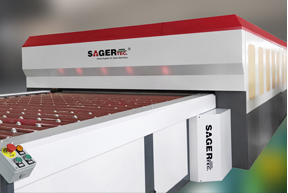
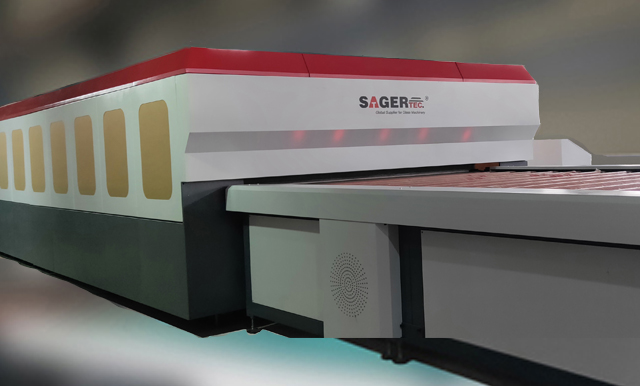
Sagertec develops autoclave-free PVB laminated glass production equipment for architectural and safety-glass processors. The ALAM series combines vacuum processing, controlled heating, automatic conveying and PLC-based recipe management without requiring a conventional high-pressure autoclave.
For factories handling mixed sizes and customized orders, an autoclave-free laminated glass line can offer several practical benefits:
lower investment in pressure-vessel infrastructure;
a compact and configurable production layout;
continuous vacuum during critical processing stages;
flexible recipes for different glass thicknesses and production loads;
reduced manual handling when integrated with automatic loading, washing, positioning, film laying and unloading equipment;
production data that supports process control and traceability.
Sagertec offers different configurations for different production requirements. The Automatic PVB Glass Laminating Line integrates glass loading, washing, positioning, film feeding, assembly, lamination and unloading. The ALAM Pro provides flexible PVB/EVA production, while the ALAM Ultra adds controlled cooling for higher-capacity applications.
Factories developing a hurricane-resistant laminated glass product should follow a controlled engineering process:
Identify the destination market, building code, impact classification and design pressure.
Select an existing approved system or work with a qualified façade/window engineer.
Confirm the glass type, thickness, heat treatment, interlayer, frame and sealant system.
Run production trials using a documented lamination recipe.
Inspect optical quality, edge condition and bonding consistency.
Conduct preliminary mechanical and environmental testing.
Test the complete glazed assembly through an accredited laboratory.
Freeze the approved bill of materials and manufacturing parameters.
Maintain batch traceability and routine quality-control procedures.
This approach prevents a common and costly mistake: developing a visually acceptable laminate first and considering system certification only after production has started.
No. The glass may crack under severe impact. Its purpose is to resist penetration, retain broken fragments and help keep the building opening protected during the subsequent wind-pressure cycles.
Heat-strengthened laminated glass is frequently used in fixed architectural applications because its larger broken fragments tend to remain attached to the interlayer. Tempered laminated glass may be selected where higher initial strength or human-impact safety requirements apply. The tested system specification always takes priority.
Many North American approved systems use approximately 2.28 mm or 0.090 inch of impact-grade PVB, but this is not a universal minimum. Interlayer product, glass size, framing and impact classification must all be considered.
Yes. An autoclave-free glass laminating line can produce high-quality PVB laminated glass for hurricane-resistant glazing systems. By using the appropriate glass configuration, qualified PVB interlayer and accurately controlled lamination process, the machine can achieve the required lamination quality and bonding performance. The complete window, door or façade system must then pass the applicable impact and cyclic-pressure tests to obtain hurricane-resistant certification
Normally, hurricane approval is based on the complete assembly, including glass, interlayer, frame, glazing materials, anchors and installation method. Changing one of these components may affect or invalidate the approval.
Hurricane-resistant laminated glass is an engineered safety system rather than a single glass recipe. Reliable performance comes from the interaction of heat-treated glass, a suitable impact interlayer, controlled lamination, secure edge retention and a properly anchored frame.
For glass processors, the first manufacturing objective should be repeatability: clean glass, controlled interlayer condition, effective de-airing, uniform heating, managed cooling and complete production records. A capable laminated glass production line provides the foundation, while engineering analysis and full-system testing establish the final hurricane rating.
If you are planning a PVB laminated glass project or evaluating equipment for impact-resistant glass production, contact Sagertec to discuss glass dimensions, interlayer construction, required capacity and the most suitable ALAM production-line configuration.