
Double-Chamber EVA Glass Laminating Furnace – SG-3000-4SD
One EVA Glass Laminating Machine, Multiple Product Opportunities
The SG-3000-4SD enables glass processors to transform standard glass into a broad range of high-value EVA laminated glass products.
Using silicone vacuum bags, controlled vacuum and programmed heating, the furnace completes the lamination process without a high-pressure autoclave. This provides a flexible solution for manufacturers seeking to expand their laminated glass capabilities while maintaining controlled equipment and facility investment.
From architectural safety glass to decorative glass containing fabric, printed designs or metal mesh, the machine supports different production requirements and order quantities. With suitable EVA and functional films, it can also produce PDLC smart glass, privacy glass, switchable glass and LED glass.
Available configurations process glass sizes up to 5800 × 2500 mm and laminated constructions up to 50 mm thick.
EVA Safety Laminated Glass
The SG-3000-4SD produces EVA safety laminated glass for a variety of architectural and interior applications.
EVA film bonds the glass layers and helps retain glass fragments after breakage. Typical products include:
- Glass doors
- Interior partitions
- Shower enclosures
- Balustrades and railings
- Canopy glass
- Ceiling glass
- Wall panels
- Furniture glass
The selected EVA film, glass construction and finished product should comply with applicable safety standards and project requirements.
Decorative Laminated Glass
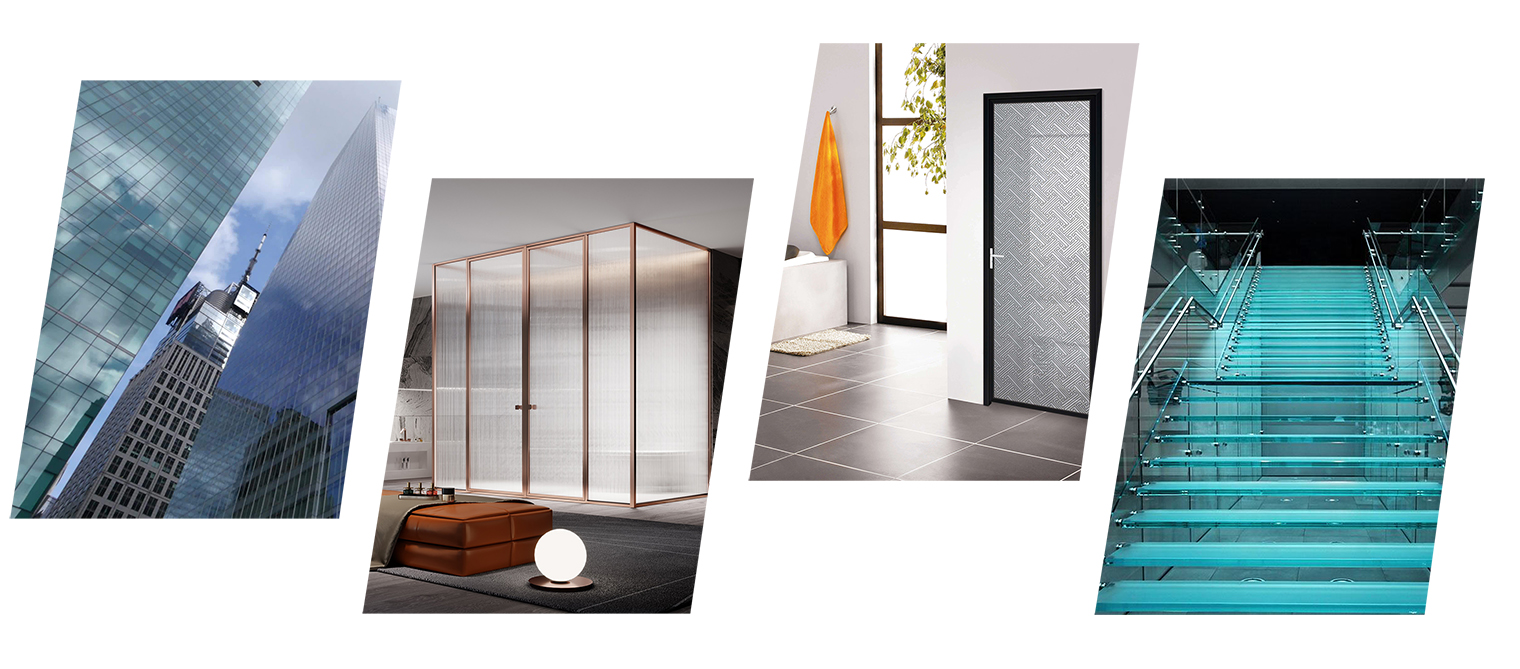 EVA film allows compatible decorative materials to be incorporated between glass sheets, giving manufacturers greater freedom to develop customized, high-value products.
Compatible decorative materials can include:
- Silk and fabric
- Paper and printed designs
- Colored EVA film
- Decorative plastic films
- Metal mesh
- Fibers
- Other heat-compatible inserts
Decorative laminated glass can be used in hotels, restaurants, offices, retail interiors, residential projects, furniture, partitions, doors and architectural wall systems.
PDLC Smart and Privacy Glass
With suitable EVA and PDLC films, the glass laminating machine can produce electrically switchable glass that changes between transparent and opaque states.
Typical applications include:
- Office partitions
- Conference rooms
- Hotel bathrooms
- Medical facilities
- Residential privacy glass
- Commercial displays
- Smart interior systems
Stored process recipes allow vacuum, heating and time parameters to be adapted to the technical requirements of different functional films.
Why Choose the SG-3000-4SD Glass Laminating Furnace?
Two Independently Controlled Chambers
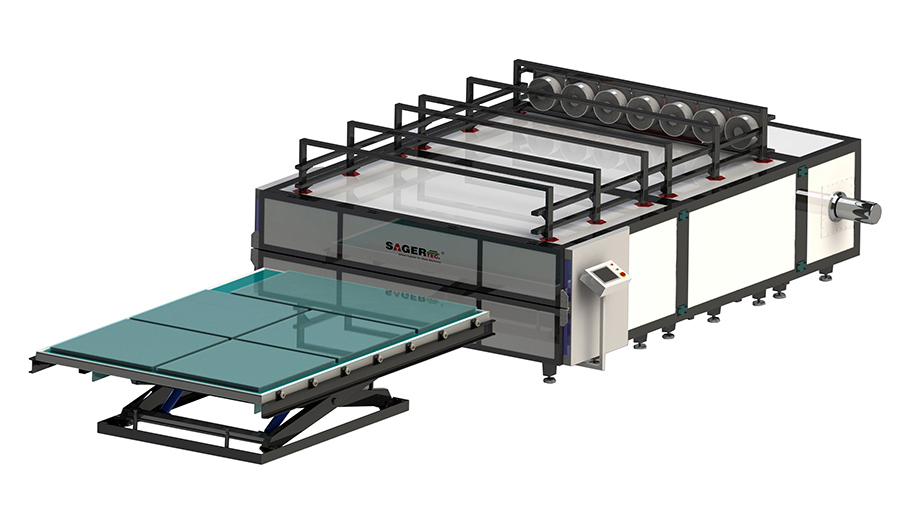
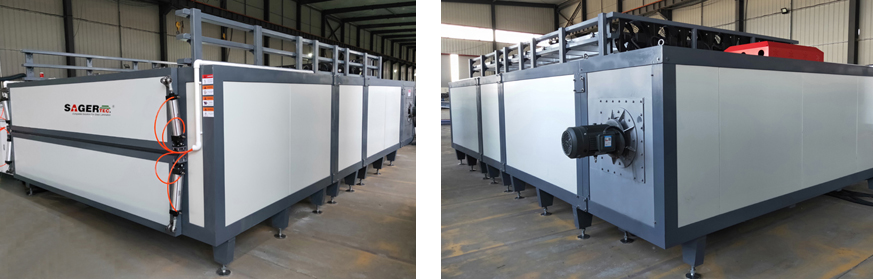
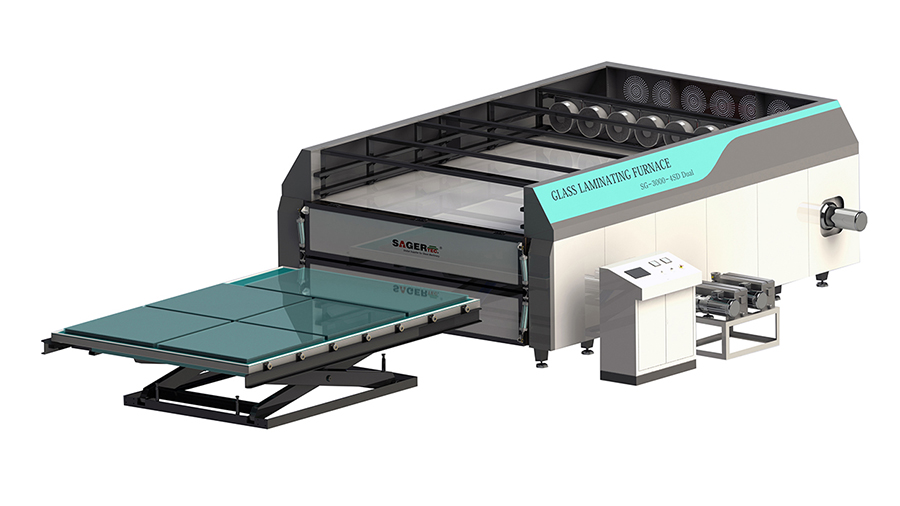
The furnace has two separate processing chambers, each accommodating two silicone vacuum bags.
Temperature and vacuum parameters can be controlled independently for each chamber. This allows manufacturers to operate one chamber for smaller orders or use both chambers for larger production batches.
Independent chamber operation provides greater production flexibility and avoids heating unused chamber capacity when current order volume is lower.
Flexible Production from One to Four Loads
The SG-3000-4SD supports several production arrangements:
- One vacuum-bag load in a single chamber
- Two loads in a single chamber
- Three loads using both chambers
- Four loads using both chambers
This allows the same EVA laminating furnace to handle individual projects, mixed orders, repeat production and larger batches.
Manufacturers can match equipment capacity to actual order requirements, improve furnace utilization and manage delivery schedules more efficiently.
Siemens PLC and Recipe Management
Once the prepared trays have been placed inside the selected chamber, the Siemens PLC automatically executes the programmed lamination cycle.
Through the touchscreen HMI, operators can:
- Configure multi-stage heating programs
- Set vacuum, temperature and processing time
- Monitor the process curve in real time
- View the operating status of each chamber
- Save recipes for different products
- Recall stored recipes for repeat orders
Recipe-based control reduces repeated manual adjustment and helps maintain consistent processing conditions across different operators, shifts and production batches.

PID Temperature Control and Uniform Heating
The PID temperature-control system continuously regulates heating output according to the programmed process curve.
An adjustable forced-air circulation system distributes heated air throughout each chamber, supporting balanced heat transfer across the glass surface and different loading positions.
The combined system provides:
- Stable temperature regulation
- Uniform chamber temperature
- Efficient heat transfer
- Consistent processing across multiple vacuum bags
- Improved control for large-format and thick glass
- Repeatable laminated glass quality
Seven-Blower Rapid Cooling System
Seven cooling blowers accelerate the cooling of the processed glass and silicone vacuum bags after the heating stage.
Faster cooling reduces waiting time between batches and improves tray turnover. It also helps stabilize the laminated glass after processing and supports a clear, consistent finished appearance.
The cooling system is particularly valuable when both chambers are operating and production efficiency is a priority.
Reliable Vacuum and Energy-Efficient Construction
Two vacuum pumps provide the vacuum capacity required for double-chamber and multi-load production. Stable vacuum extraction helps remove trapped air and supports consistent bonding between the glass and EVA film.
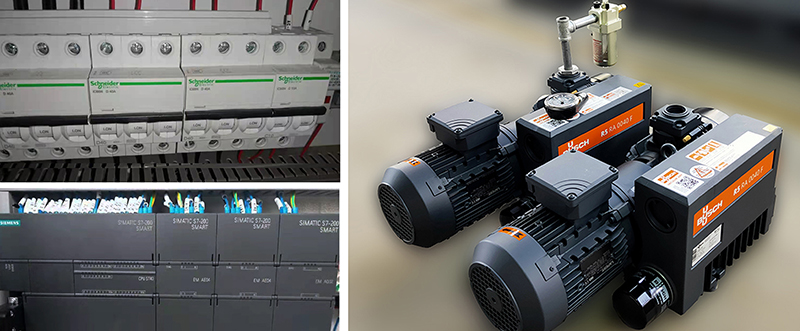
An automatic vacuum-holding system can temporarily maintain vacuum pressure inside the silicone bags in the event of an unexpected power interruption. This gives the operator additional response time and helps protect the current production batch.
The furnace enclosure uses a heat-loss-reducing insulation structure. Together with independent chamber operation and PID temperature regulation, this helps retain heat, avoid unnecessary energy use and improve overall operating efficiency.
How the EVA Glass Laminating Furnace Works
1. Prepare the Glass
The glass is thoroughly cleaned and assembled with the selected EVA film. Decorative or functional materials can be incorporated according to the intended product.
2. Prepare the Vacuum Bags
The assembled glass is placed inside silicone vacuum bags. Each bag is sealed, connected to the vacuum system and positioned on a loading tray.
3. Load the Selected Chamber
The prepared trays are placed inside one or both chambers. Each chamber can accommodate up to two vacuum-bag loads.
4. Select and Start the Recipe
The operator selects a stored recipe or sets the required vacuum, heating, temperature and processing-time parameters through the touchscreen HMI.
Once the cycle starts, the Siemens PLC automatically controls vacuum extraction, multi-stage heating, temperature regulation, holding time and other programmed stages.
5. Cool and Unload the Glass
After heating, the trays are transferred to the cooling position. Seven blowers accelerate cooling before the finished laminated glass is removed and inspected.
Depending on the glass size, thickness, loading quantity, EVA film and selected recipe, a complete production cycle normally takes approximately 40–150 minutes.
Technical Specifications
| Item | Specification |
|---|---|
| Model | SG-3000-4SD |
| Machine Type | Double-chamber EVA glass laminating furnace |
| Laminating Film | EVA film |
| Processing Method | Silicone vacuum-bag batch lamination |
| Number of Chambers | 2 |
| Vacuum Bags per Chamber | 2 |
| Total Loading Capacity | Up to 4 vacuum-bag loads |
| Control System | Siemens PLC with touchscreen HMI |
| Temperature Control | PID regulation |
| Heating System | Adjustable forced-air circulation |
| Heating Temperature | 0–150°C |
| Cooling System | Seven cooling blowers |
| Vacuum System | Two vacuum pumps |
| Vacuum Level | Up to approximately −100 kPa |
| Maximum Laminated Glass Thickness | 50 mm |
| Minimum Glass Construction | 3 + 3 mm |
| Compressed Air Requirement | 0.8 MPa |
| Electrical Power Supply | Customizable |
| Reference Installed Power | Approximately 81 kW |
| Production Cycle | Approximately 40–150 minutes |
Production time depends on the glass size, glass thickness, loading quantity, EVA film specification and selected process recipe. Installed power may vary according to machine size and configuration.
Available Processing Sizes
| Maximum Glass Size | Corresponding Vacuum-Bag Size |
|---|---|
| 3700 × 2500 mm | 3860 × 2640 mm |
| 4700 × 2500 mm | 4860 × 2640 mm |
| 5800 × 2500 mm | 6000 × 2640 mm |
FAQ – EVA Glass Laminating Furnace
1. What is an EVA glass laminating furnace?
An EVA glass laminating furnace is a vacuum-bag machine that uses controlled vacuum and heating to bond glass with EVA film.
Depending on the market, this type of equipment may also be called an EVA glass laminating machine, EVA glass laminating oven, laminated glass furnace or glass lamination machine.
2. What products can the SG-3000-4SD produce?
It can produce EVA safety laminated glass, decorative laminated glass, fabric or metal-mesh laminated glass, PDLC smart glass, privacy glass, switchable glass and LED functional glass.
3. How do the two independent chambers work?
Each chamber accommodates two silicone vacuum bags and has independently controlled temperature and vacuum.
One chamber can be used for one or two loads, while both chambers can operate simultaneously for three or four loads.
4. Is the lamination process automatically controlled?
Yes. After the prepared trays have been placed inside the furnace, the Siemens PLC automatically manages vacuum, multi-stage heating, temperature and processing time according to the selected recipe.
Glass assembly, vacuum-bag preparation and tray movement are completed by the operator.
5. What is the maximum glass size?
The furnace is available for maximum glass sizes of:
- 3700 × 2500 mm
- 4700 × 2500 mm
- 5800 × 2500 mm
The maximum laminated glass thickness is 50 mm.
6. How long does one production cycle take?
A typical cycle takes approximately 40–150 minutes.
Actual processing time depends on the glass size, glass thickness, number of loads, EVA film and selected production recipe.
7. Can the machine produce PDLC smart glass?
Yes. With suitable EVA and PDLC films, the furnace can produce smart glass, privacy glass and switchable glass.
The production recipe should be selected according to the technical requirements and temperature limitations of the functional film.
8. What information is required for machine selection and quotation?
To recommend the correct configuration, please provide:
- Maximum glass size
- Typical glass thickness
- Products you plan to manufacture
- Expected daily production
- Number of working hours per day
- Available factory space
- Local voltage and frequency
Based on this information, we can recommend the appropriate furnace size, vacuum-bag configuration and electrical specification.