
Flexible PVB Laminated Glass Production for Batch and Custom Orders
The Standard PVB Glass Laminating Line provides all the essential equipment required to produce architectural and safety laminated glass using standard PVB interlayer film without a conventional high-pressure autoclave.
The line integrates glass washing, PVB film preparation, glass assembly, vacuum-assisted handling and autoclave-free lamination into a practical production workflow. Its balanced combination of automated processing and operator-guided assembly makes it suitable for glass factories requiring production flexibility without the investment and floor-space requirements of a highly automated production line.
Standard configurations are available for glass sizes of 3700 × 2500 mm and 5200 × 2600 mm. Other glass sizes, line layouts and equipment combinations can be customized according to the customer’s products, capacity requirements and available factory space.
Complete and Configurable Production Solution
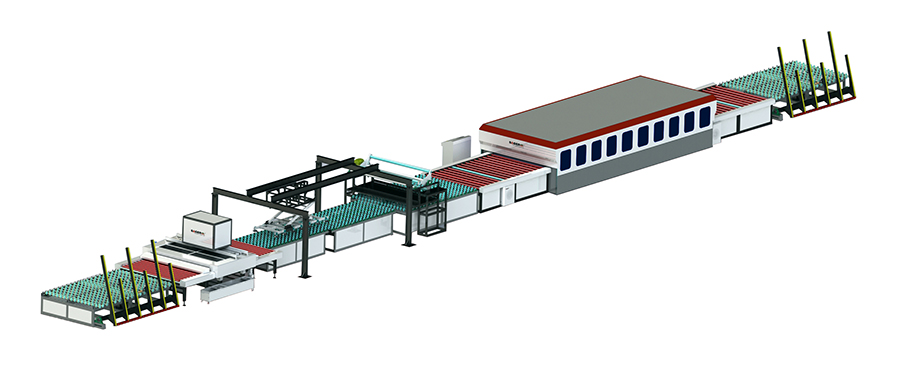
A typical Standard PVB Glass Laminating Line consists of:
- Glass washing and drying machine
- Glass transfer and assembly tables
- Three-roll PVB film holder
- X-axis vacuum glass handling system
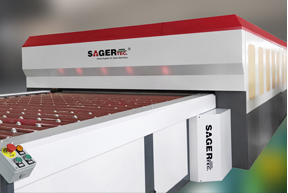
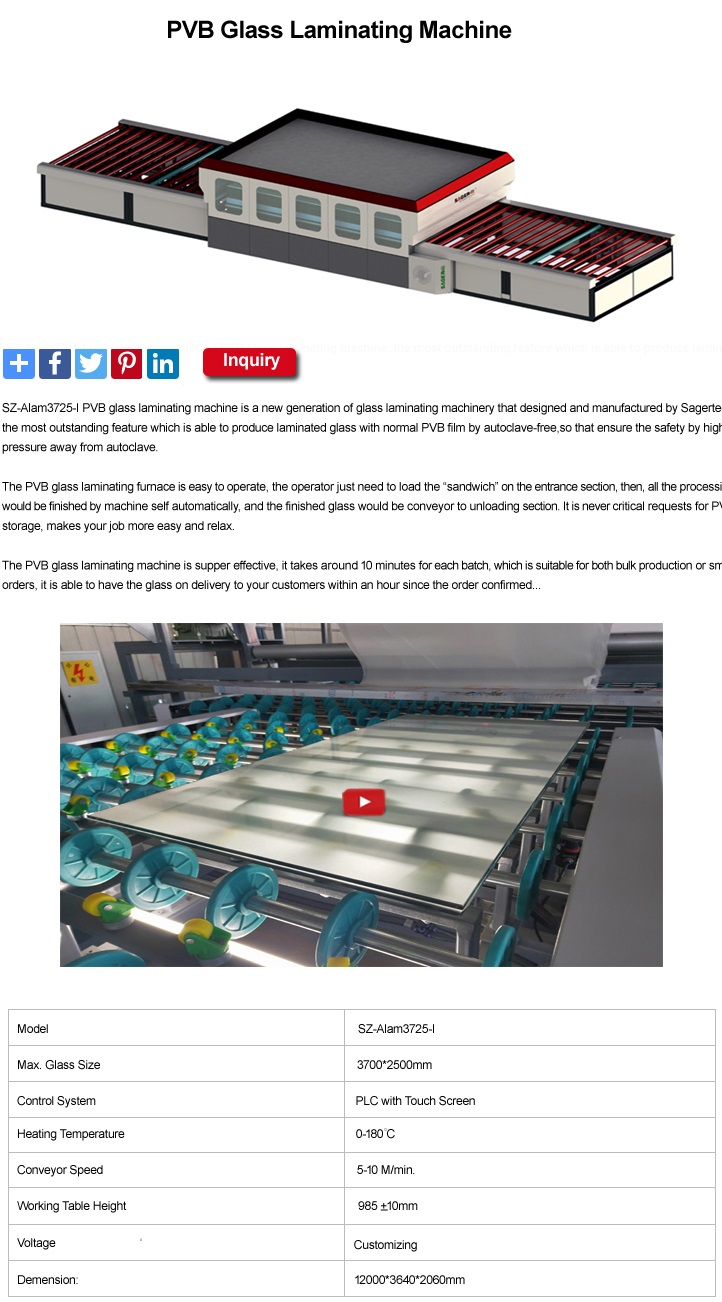
- ALAM autoclave-free PVB glass laminating machine
- Siemens S7-1500 PLC control system
Glass loading and unloading are normally performed by the operators. Automatic loading and unloading systems can be added as optional equipment when required.
This modular design allows each laminated glass production line to be configured according to the required glass dimensions, production capacity, factory layout and investment plan.
Operator-Guided PVB Film Laying and Glass Assembly
The Standard Series uses a practical, operator-guided process for PVB film laying, cutting and glass alignment.
The PVB film holder accommodates up to three film rolls with a maximum film width of 2600 mm. The operator selects the required PVB film, lays it onto the lower glass sheet and cuts it according to the required dimensions.
This arrangement provides flexibility when processing different glass specifications, PVB thicknesses and customized orders. It also simplifies the mechanical configuration of the assembly section and helps reduce the overall investment and space requirements of the production line.
X-Axis Vacuum Glass Handling System
The assembly section is equipped with a vacuum suction handling system that lifts the upper glass sheet and moves it along the X-axis.
The vacuum glass handling system reduces the physical effort required to lift and move large glass sheets. The operator controls the final positioning and alignment before placing the upper glass sheet over the PVB interlayer.
This assisted handling method provides a practical solution for assembling large laminated glass panels while retaining the flexibility needed for custom and multilayer glass production.
Autoclave-Free PVB Glass Lamination
After glass assembly, the panel is transferred into the selected ALAM glass laminating machine.
The ALAM system uses controlled vacuum, heating and conveying processes to complete the lamination of standard PVB interlayer film without a traditional high-pressure autoclave. Automated process control helps maintain stable operating parameters and repeatable laminated glass results across different production runs.
Removing the need for a high-pressure autoclave can reduce equipment investment, facility complexity and pressure-vessel-related operating requirements.
Three ALAM Laminating Machine Options
The Standard PVB Glass Laminating Line can be configured with ALAM Core, ALAM Pro or ALAM Ultra according to the required investment level and production capacity.
ALAM Core
A cost-efficient PVB laminating configuration for glass processors seeking automated autoclave-free lamination with moderate production requirements and a controlled initial investment.
ALAM Pro
A balanced configuration combining stable laminated glass processing, production flexibility and higher output. It is suitable for regular batch production and factories processing a varied order mix.
ALAM Ultra
A high-capacity configuration developed for manufacturers with demanding output requirements. ALAM Ultra includes a controlled cooling system to improve cooling efficiency and increase overall production capacity.
Multilayer Laminated Glass Capability
The line can be used to produce both standard two-sheet laminated glass and multilayer laminated glass constructions.
The operator-guided assembly section provides the flexibility required to place multiple glass sheets and PVB interlayers according to the specified laminated glass structure. This makes the line suitable for standard products as well as customized architectural and safety glass orders.
Reduced Dependence on Full-Room Humidity Control
The ALAM laminating process is designed to remove moisture absorbed by the PVB interlayer during processing. This reduces dependence on a dedicated, fully climate-controlled production room and can lower facility and environmental-control requirements.
PVB film must nevertheless be stored and handled according to the interlayer manufacturer’s instructions. Appropriate temperature, cleanliness, moisture management and edge protection remain important for reliable laminated glass production.
Main Features and Advantages
Complete Autoclave-Free Production Process
The line provides the essential equipment required for washing, film preparation, assembly, vacuum-assisted handling and PVB glass lamination without a high-pressure autoclave.
Practical Investment Level
The combination of automated washing and lamination with operator-guided film laying and assembly provides a practical balance between equipment investment and production capability.
Compact and Flexible Layout
The standard configuration eliminates unnecessary automation equipment and can therefore reduce the total length and floor-space requirements of the laminated glass production line.
Three-Roll PVB Film Holder
Up to three PVB film rolls can be installed, with a maximum film width of 2600 mm.
Vacuum-Assisted Glass Handling
The vacuum lifting system supports the handling of large glass sheets and provides X-axis movement across the assembly section.
Large-Format Glass Processing
Standard configurations support glass sizes of 3700 × 2500 mm and 5200 × 2600 mm. Customized sizes are also available.
Multilayer Glass Production
The flexible assembly process supports both conventional two-sheet laminated glass and multilayer PVB laminated glass.
Flexible Production Mix
The line is suitable for batch production, customized products and mixed orders involving different glass dimensions and laminated glass constructions.
Two to Three Operators
The Standard PVB Glass Laminating Line can normally be operated by two to three people, depending on the production arrangement.
Flexible ALAM Configuration
ALAM Core, Pro and Ultra are available to meet different requirements for investment, production capacity and cooling efficiency.
How the Standard PVB Glass Laminating Line Works
1. Glass Loading
The operator places the glass sheet onto the glass washing machine or its infeed section.
2. Glass Washing and Drying
The glass washing machine automatically cleans and dries the glass, removing dust, oil and other surface contaminants before assembly.
3. PVB Film Preparation
The lower glass sheet is transferred to the assembly table. The operator selects the required film from the three-roll PVB film holder, lays it over the glass and manually cuts it to the required dimensions.
4. Vacuum-Assisted Glass Handling
The vacuum suction system lifts the upper glass sheet and moves it along the X-axis toward the assembly position.
5. Glass Alignment and Assembly
The operator aligns the upper and lower glass sheets and places the upper glass over the PVB interlayer. The process can be repeated when producing multilayer laminated glass.
6. Glass Transfer
The assembled glass panel is conveyed or transferred into the ALAM PVB glass laminating machine.
7. Autoclave-Free Lamination
The ALAM laminating machine automatically applies the programmed vacuum and heating process to complete PVB glass lamination without a conventional high-pressure autoclave.
8. Glass Unloading
After lamination, the finished laminated glass is unloaded by the operator for inspection and subsequent handling. An automatic unloading system can be supplied as an option.
Typical Configuration
Glass Washing and Drying Machine → Glass Assembly Tables →Vacuum Glass Handling System → Three-Roll PVB Film Holder → ALAM Autoclave-Free PVB Glass Laminating Machine
Optional equipment:
- Automatic glass loading table
- Automatic glass unloading table
- Customized transfer tables
- Customized line layout
- Additional handling equipment
Applications
The Standard PVB Glass Laminating Line is suitable for producing:
- Architectural safety laminated glass
- Laminated glass for building façades
- Laminated glass for windows and doors
- Glass railings and balustrades
- Laminated glass partitions
- Laminated glass canopies
- Laminated glass skylights
- Decorative PVB laminated glass
- Large-format laminated glass
- Multilayer laminated glass
- Customized laminated glass products
Technical Specifications
| Item | Specification |
|---|---|
| Product Type | Standard PVB Glass Laminating Line |
| Lamination Process | Autoclave-free PVB glass lamination |
| Standard Maximum Glass Sizes | 3700 × 2500 mm / 5200 × 2600 mm |
| Customized Glass Sizes | Available |
| Glass Thickness Range | Minimum 3+3 mm; maximum total thickness 40 mm |
| PVB Film Roll Capacity | 3 rolls |
| Maximum PVB Film Width | 2600 mm |
| PVB Film Laying | Operator-guided |
| PVB Film Cutting | Manual |
| Glass Alignment | Operator-guided |
| Glass Handling System | Vacuum suction lifting with X-axis movement |
| Multilayer Laminated Glass | Available |
| Heating Temperature | 0–160°C |
| Working Table Height | 980 ±10 mm |
| Required Operators | Normally 2–3 |
| Laminating Machine Options | ALAM Core / ALAM Pro / ALAM Ultra |
| Production Capacity | Depends on glass specifications and selected ALAM model |
| Production Cycle | Depends on glass specifications and selected ALAM model |
| Overall Line Dimensions | Based on selected equipment and factory layout |
| Installed Power | Based on selected equipment and ALAM model |
| Power Supply | Customizable |
FAQ
1. What is a Standard PVB Glass Laminating Line?
It is a complete laminated glass production line combining glass washing, PVB film preparation, glass assembly, vacuum-assisted handling and autoclave-free lamination. It is designed for flexible batch and customized PVB laminated glass production.
2. Does this PVB glass laminating line require an autoclave?
No. The line uses an ALAM glass laminating machine to complete PVB lamination without a conventional high-pressure autoclave.
3. Can the line process standard PVB interlayer film?
Yes. The glass laminating line is designed to manufacture laminated glass using standard PVB interlayer film.
4. How are PVB film laying and cutting performed?
The operator selects the required PVB roll, lays the film over the glass and cuts it to the required dimensions at the assembly station.
5. How many PVB film rolls can be installed?
The film holder accommodates up to three PVB rolls with a maximum film width of 2600 mm.
6. How is the upper glass sheet handled?
A vacuum suction system lifts the upper glass sheet and moves it along the X-axis. The operator then completes the final alignment and glass assembly.
7. What is the maximum glass size?
Standard configurations are available for glass sizes up to 3700 × 2500 mm and 5200 × 2600 mm. Other dimensions can be customized.
8. Can the line produce multilayer laminated glass?
Yes. The operator-guided assembly section can be used to prepare both conventional and multilayer PVB laminated glass constructions.
9. How many operators are required?
The production line normally requires two to three operators, depending on the dimensions and weight of the glass and the production arrangement.
10. Are automatic loading and unloading systems available?
Yes. Automatic loading and unloading systems can be added as optional equipment. The standard configuration normally uses manual loading and unloading to maintain a compact layout and practical investment level.
11. Which ALAM laminating machine can be used?
The line can be configured with ALAM Core, ALAM Pro or ALAM Ultra according to the required investment and production capacity.
12. Does the line include controlled cooling?
Controlled cooling is included when the production line is configured with ALAM Ultra.
13. Is a humidity-controlled room required?
The ALAM laminating process reduces dependence on a dedicated, fully climate-controlled production room. However, PVB film must still be stored and handled according to the film manufacturer’s temperature, moisture and cleanliness requirements.
14. Can the line configuration be customized?
Yes. Glass size, equipment combination, factory layout, power supply, installed power and handling equipment can be customized according to the customer’s requirements.
Call to Action
Configure a PVB Glass Laminating Line for Your Production Requirements
The appropriate production line configuration depends on your maximum glass size, laminated glass structure, expected output, available factory space and investment plan.
Provide us with your glass specifications, daily production target and factory layout. We will recommend the appropriate ALAM Core, Pro or Ultra configuration and prepare a customized PVB glass laminating line proposal.
Contact Sagertec for technical consultation, line configuration and quotation.